
If you have completed a Herbert Protocol form for someone living with dementia, you’ve already taken an important step.
You’ve gathered the right information.
You’ve made it easier for police to act quickly if needed.
You’ve planned ahead with care.
The Herbert Protocol is there to support families at one of the most stressful moments – when someone has gone missing. Having that information ready can make a real difference.
But many incidents don’t begin as emergencies.
Why everyday identification matters
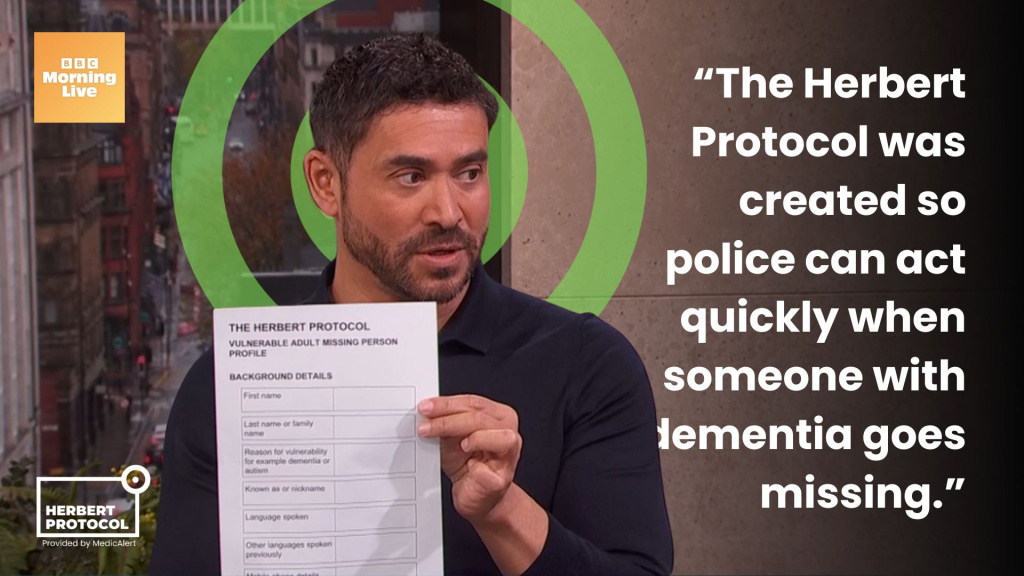
Nationally highlighted on BBC Morning Live with former detective Rav Wilding. You can watch the full video or read the full article.
Research shows that around 70% of people living with dementia will go missing at some point after diagnosis. In most cases, it happens during completely ordinary activities – going for a walk, visiting the local shops, or stepping out briefly.
These are everyday moments.
The Herbert Protocol was created after the tragic death of George Herbert, a war veteran who went looking for his childhood home and sadly died before help could reach him. The protocol helps make sure that, if someone does go missing, police have the information they need straight away.
But sometimes a person may be found confused or disoriented before a missing person report is made.
In those moments, clear and visible identification can help others understand what’s happening more quickly.
Adding everyday reassurance

Medical identification, such as a MedicAlert ID, can provide immediate reassurance if someone is found alone and unable to explain their situation.
An ID can:
- Show that the person is medically vulnerable
- Display a unique identification number
- Provide access to a 24/7 emergency helpline
- Allow emergency services to access confirmed medical and contact details
This means support can begin sooner, without waiting for further information.
Working alongside the Herbert Protocol
The Herbert Protocol and everyday medical identification aren’t alternatives – they work well together.
The Herbert Protocol prepares essential information in case someone is reported missing.
Medical identification helps in those early moments, when someone is found but may not be able to communicate clearly.
Together, they provide added reassurance for families and carers.
Additional support available
MedicAlert works in partnership with The McLay Dementia Trust to offer eligible people living with dementia their first year of MedicAlert membership free.
If you would like to learn more about this initiative, you can contact MedicAlert directly on 01908 951045 to discuss whether it may be suitable.
Planning ahead is one way we show care.
Adding everyday identification can simply strengthen the protection you’ve already put in place.
Because when it comes to dementia safety, reassurance matters – for everyone involved.